For travellers interested in nature, it is one of the most useful visits in Mauritius because it explains what the island has lost and what conservation tries to rebuild.
Why visit Ile aux Aigrettes
Mauritius is famous for beaches, but its natural history is also a story of extinction, introduced species and habitat change. Ile aux Aigrettes makes that story visible in a compact, guided setting.
The visit helps travellers understand why small reserves matter on islands.
Mauritian Wildlife Foundation
The Mauritian Wildlife Foundation is closely linked with the reserve and its conservation work. Guides may explain restoration, native plants, endangered birds and the long effort required to repair an island ecosystem.
This context is the main value of the visit. Without explanation, the island can look simple. With a guide, every plant and animal carries meaning.
What you may see
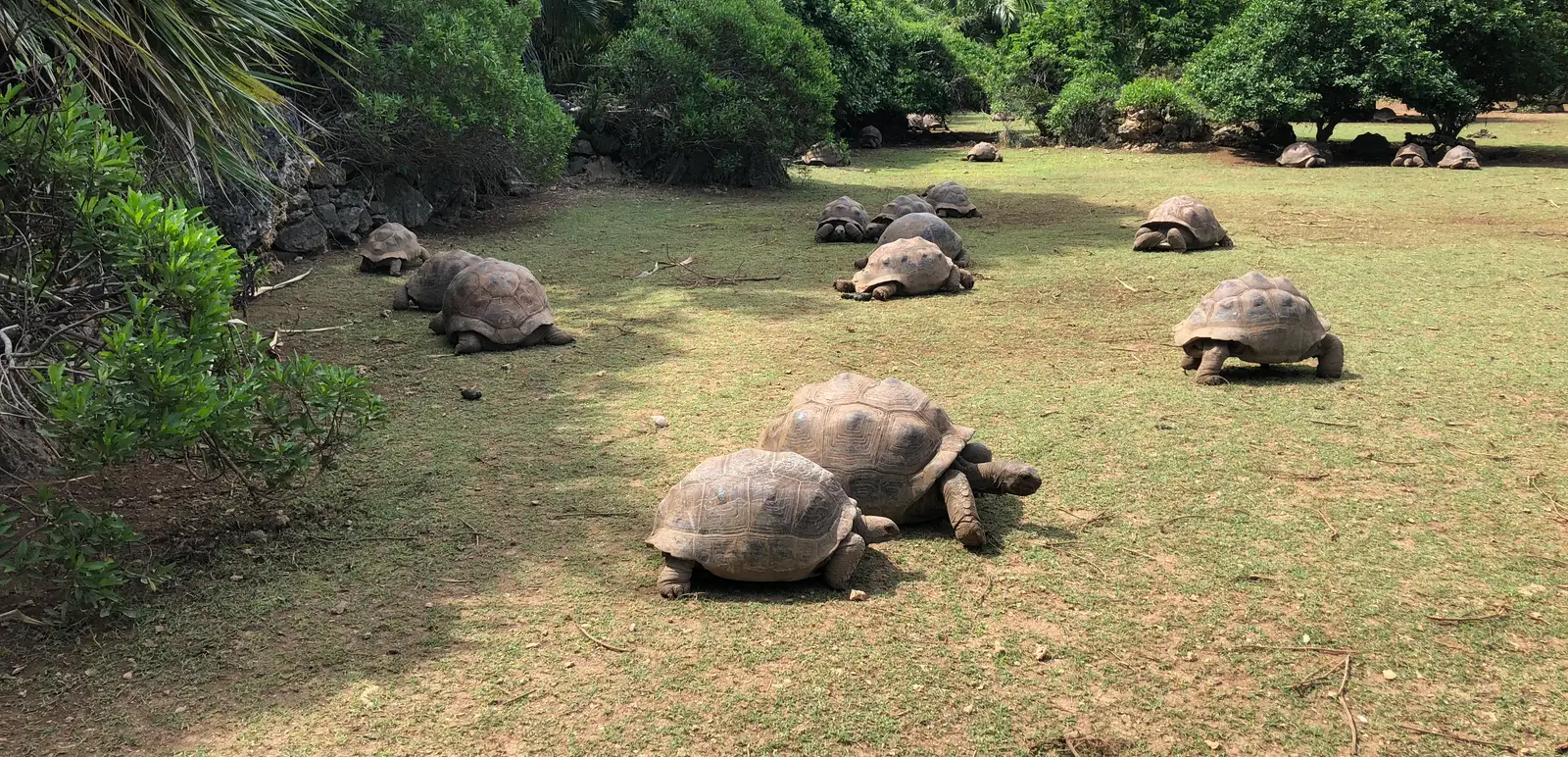
Depending on the visit, you may hear about giant tortoises, pink pigeons, Mauritius fodies, skinks, bats, ebony trees and other native or restored species.
Wildlife sightings vary, but the strongest experience is understanding the web of conservation rather than collecting a single animal photo.
Boat transfer and booking
Access is by organised boat transfer, often from the Pointe Jerome area. Check schedules, price, meeting point, weather conditions and booking rules before planning the day.
Do not treat it like a beach where you can simply arrive whenever you want. The visit is structured and capacity is limited.
How long to plan
Leave margin before and after the boat transfer. Sea conditions, group organisation and return timing can affect the day.
The south-east of Mauritius deserves time. Combine Ile aux Aigrettes with Mahebourg, Blue Bay or a slower coastal stop rather than rushing back across the island.
Responsible behaviour
Stay on paths, listen to the guide, do not feed animals and do not remove anything. The reserve exists because small details matter.
A good visit is not measured by how close you get to a tortoise. It is measured by how clearly you understand island conservation after leaving.
Who should go?
Ile aux Aigrettes suits families, wildlife travellers, birders, conservation-minded visitors and anyone who wants Mauritius to feel deeper than a resort stay.
It also pairs well with Mauritius beaches, Blue Bay and Black River Gorges, adding a stronger conservation thread to an island trip.
Species and restoration
The Mauritian Wildlife Foundation uses Ile aux Aigrettes to tell a broader restoration story. Visitors may hear about pink pigeons, giant tortoises, skinks, ebony, native coastal forest and species that survived only through long conservation work.
The island also helps explain why Mauritius lost so much original habitat. Introduced plants and animals, coastal change and human settlement reshaped the ecosystem over time.
Why the boat transfer matters
The boat transfer keeps the visit controlled. That structure protects the reserve from becoming another casual beach stop. It also means travellers need to plan around schedules, capacity and sea conditions.
Check the meeting point carefully. Pointe Jerome and the south-east coast are not the same logistical rhythm as Grand Baie or Flic en Flac.
Better itinerary design
Pair Ile aux Aigrettes with Mahebourg for history and Blue Bay for lagoon context. Together, the three stops create a strong south-east Mauritius day: culture, conservation and marine life.
This is much stronger than treating the reserve as a small optional extra. It becomes a way to understand the island beyond hotel beaches.
Ile aux Aigrettes Nature Reserve
Ile aux Aigrettes Nature Reserve is small, but that is part of its strength. The island makes conservation visible in a short, guided format. Visitors can understand native coastal forest, restored habitat and species protection without needing a difficult hike.
The reserve also helps explain why Mauritius nature cannot be judged only by what survives today. Much of the original ecosystem was changed by settlement, introduced animals, invasive plants and coastal development.
Mauritian Wildlife Foundation work
The Mauritian Wildlife Foundation gives the visit its meaning. Guides can explain how restoration works, why native plants matter, how endangered birds are managed and why controlled access is necessary.
This is not a zoo-style stop. It is a conservation project where the story behind the species is as important as the sighting itself.
Birds, tortoises and native forest
Visitors may hear about pink pigeon recovery, Mauritius fody, skinks, bats, ebony, native trees and giant tortoises. Some tortoises may be Aldabra giant tortoises, used in restoration contexts because Mauritius lost its own giant tortoise species.
The key is to avoid promising a perfect wildlife checklist. A better page explains what each species represents in the island’s wider recovery story.
South-east Mauritius planning
The boat transfer usually connects with the Pointe Jerome area near Mahebourg. That makes the reserve a natural partner for Mahebourg waterfront, Blue Bay Marine Park and a slower south-east itinerary.
Travelers staying in Grand Baie or Flic en Flac should not underestimate road time. Plan the visit around the transfer schedule, not around wishful thinking.
Who benefits most from the visit
Families benefit because the guide turns nature into a story. Birders benefit because the reserve adds endemic context. Responsible travellers benefit because Ile aux Aigrettes shows how much work is required to restore a small island.
Ile aux Aigrettes Nature Reserve is run by the Mauritian Wildlife Foundation, and understanding that link helps travellers see why the reserve matters for conservation across south-east Mauritius, not only as a travel stop.
Frequently asked questions
Where is Ile aux Aigrettes?
It is off the south-east coast of Mauritius, near Mahebourg and Pointe Jerome.
How do you visit?
Visits are usually guided and reached by organised boat transfer. Check current booking details before going.
Is it worth visiting?
Yes, especially if you care about wildlife, conservation and understanding Mauritius beyond beaches.
Sources / references
Methodology: every fact, figure and quotation is checked and sourced by the newsroom.

Author
Pascal Viroleau
Article produced under the newsroom charter: constructive journalism, cited sources and a stated level of verification.