The right question is not only which beach is beautiful. It is where to swim in Reunion Island safely, legally and comfortably.
Hermitage lagoon
The Hermitage lagoon is one of the most reassuring areas for many visitors. The reef helps create calmer water, and the west coast location makes it easy to combine with restaurants, shade and sunset.
Even in the lagoon, respect the reef. Do not walk on coral, do not feed fish and avoid damaging the living environment that protects the beach.
La Saline and Trou d Eau
La Saline and Trou d Eau are often linked with lagoon swimming. They can work well for families when conditions are calm, but local signs and lifeguard information still matter.
Choose the clearest, most supervised option rather than the prettiest patch of sand.
Saint-Leu
Saint-Leu has coastal atmosphere and Kelonia nearby. Some lagoon areas can be pleasant, but swimming depends on the exact zone and current conditions. Do not generalize from one beach name to the whole coast.
The west coast is the most practical for swimming, yet it still requires attention.
Why open ocean swimming is risky
Reunion Island shark attacks are one reason travellers search for safety advice. The full picture also includes currents, swell, rocks, passes and changing weather.
If a beach is not authorized for swimming, do not enter the water. If no one is swimming and signs are warning visitors, stay on land.
Natural pools and rivers
Pools and waterfalls can look inviting, especially after hiking. They also carry risks: flash floods, slippery rocks, sudden rain upstream and local closures.
Never enter a ravine or river pool after heavy rain. Mountain weather can affect water downstream even when the coast looks calm.
With children
Families should choose supervised, shallow and readable water. Shade, shoes, water and sun protection matter as much as the beach name.
A safe beach day in Reunion Island is planned, not improvised. The island rewards caution.
How to build a beach day
Start early, check the sea and use the lagoon while the day is still comfortable. Take a shaded break at midday. Return later for walking or sunset rather than forcing long hours in the water.
If conditions are poor, choose Kelonia, a market, a viewpoint or a coastal walk. A flexible plan is safer and often more enjoyable.
Shark safety, explained calmly
Shark risk in Réunion is a serious, well-documented subject that deserves a calm and practical answer. It is central to the discussion. Safe swimming also depends on authorized zones, reef passes, swell, currents, lifeguards and local decrees.
Reunion Island beaches are beautiful even when they are not swimmable. Some are for walking, sunset and photography. Others, especially lagoon areas on the west coast, are better suited to entering the water.
Reading a beach before swimming
Look for flags, signs, other swimmers, lifeguard presence, reef protection and the shape of the water. If waves break hard on the reef or a pass pulls water outward, stay out.
The Hermitage lagoon, La Saline and nearby west-coast areas are often the first names visitors hear, but each day still needs a fresh check.
Saint-Gilles-les-Bains and the west coast
Saint-Gilles-les-Bains is the practical center for many beach travellers. It has hotels, restaurants, water sports providers and easy access to the lagoon. This is where many visitors first understand why the west coast is more usable than the open volcanic coast.
Nearby swimming areas can be protected by a coral reef, which changes the experience. The water may look calmer, the entry can be gentler and snorkeling is easier when conditions are right. That protection is not a guarantee. Reef passes, wind and swell still matter.
Saint-Paul and Boucan Canot
Saint-Paul gives a useful coastal reference point between the north-west and the beach resorts. It is better known for its market and seafront than for casual swimming. Use it as a food, culture and sunset stop rather than a simple beach promise.
Boucan Canot Beach is famous, lively and photogenic. It can also be exposed. Visitors should follow current rules, supervised zones and local advice before entering the water. Treat boucan canot beach as a place where beauty and caution must stay together.
Saint-Pierre, Grande Anse and Etang-Sale
Saint Pierre works well for a southern coastal day because the town adds restaurants, a port atmosphere and evening life. Its beach setting is useful when you want water activities without leaving urban comfort completely.
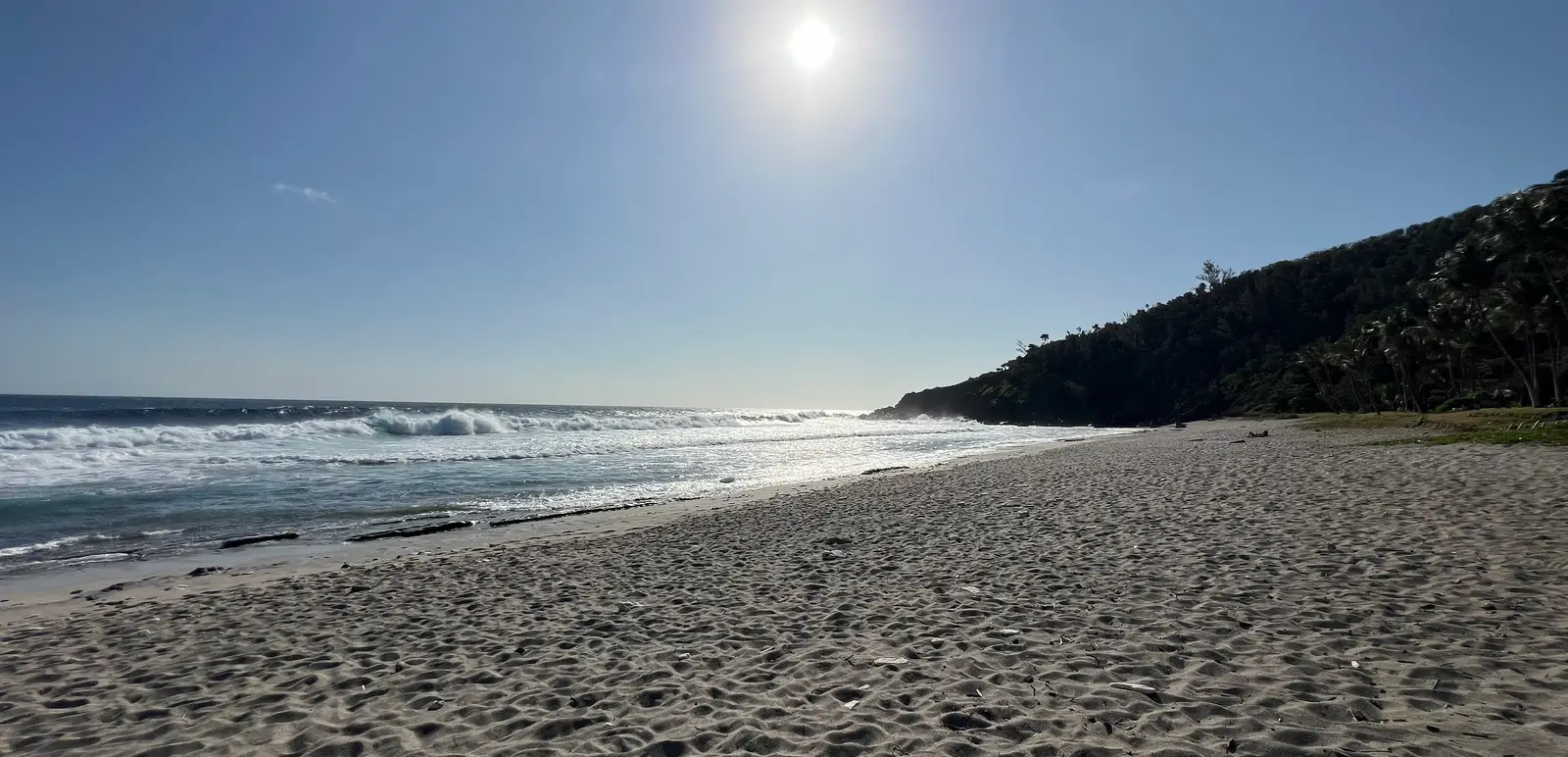
Grande Anse is one of the most attractive southern beach landscapes. Palm trees, cliffs and a wide curve of sand make Grande Anse memorable, but swimming in the open sea is permanently prohibited there by municipal bylaw, because of powerful currents and shark risk. Only use the protected basin, when it is open and supervised.
Etang-Sale, often written Étang Salé, is known for its black sand beach. That dark volcanic sand creates a different mood from the white sand beaches visitors may expect elsewhere in the Indian Ocean. It can be striking for walking, photography and sunset, but heat, surf and safety rules matter.
Water activities and realistic expectations
Water sports and water activities in Reunion Island are best chosen through local operators who understand the coastline. Kayaking, paddleboarding, snorkeling or guided lagoon sessions can be enjoyable when they stay inside suitable zones.
Do not compare every beach with Mauritius. Reunion Island is shaped by Piton de la Fournaise, steep relief and volcanic coastlines. That geology is part of the appeal. It also explains why some beaches are spectacular for the eyes but not simple for swimming.
Shark vocabulary without panic
Readers may see references to bull shark risk when researching Reunion Island beaches. The important response is not panic. It is discipline: swim only where allowed, respect signs, avoid isolated open-ocean entries and ask locally when in doubt.
The safest article is one that does not oversell. Reunion offers lagoons, coastal towns, black sand, sunsets and marine life, but the island asks visitors to read the sea carefully.
How to choose an authorized beach
Before choosing a beach, look for three signals: a clearly authorized swimming area, current local information and conditions that match your ability. A lagoon protected by reef is easier to understand than an exposed surf beach, but even a lagoon deserves attention.
For a relaxed first stay, build the beach part of the trip around Hermitage, La Saline, Saint-Gilles-les-Bains and supervised west coast areas. Use Saint-Pierre, Grande Anse and Etang-Sale for variety, scenery and local atmosphere rather than assuming every stop is a swimming stop.
Better alternatives on risky days
If the sea is rough, choose Kelonia, a market, a viewpoint, a coastal walk or a mountain route. Reunion Island is strong precisely because beach time is only one part of the trip.
Travelers who understand this enjoy the island more. They do not measure the destination only by how many hours they spent swimming.
Frequently asked questions
Can you swim in Reunion Island?
Yes, but only in authorized and suitable areas such as certain lagoon zones, supervised beaches or approved pools.
Why are Reunion Island beaches considered risky?
Some areas have shark risk, strong currents, surf, rocks and unsafe passes. Local rules must be followed.
Where is the easiest beach area?
The west coast lagoon around Hermitage, La Saline and nearby areas is often the easiest for visitors, depending on conditions.
Sources / references
Methodology: every fact, figure and quotation is checked and sourced by the newsroom.

Author
Pascal Viroleau
Article produced under the newsroom charter: constructive journalism, cited sources and a stated level of verification.